


"The Renaissance Unchained" (ctd.)
February 22 2016
Video: BBC
The latest installment of Waldemar's 'Renaissance Unchained' is on BBC4 tonight at 9pm. A clip is above.
Bish, bash, Bosch
February 21 2016

Picture: Ghent Museum of Fine Arts
The controversy around Bosch attributions continues, in light of the new exhibition at the Noordbrabants Museum, and the work of the Bosch Research and Conservation Project (BRCP). The latter seems to be going the way of the Rembrandt Research Project in its early days, and becoming 'exclusionist' - even to the extent that we must wonder if the number of Bosch attributions that they accept can ever reflect his subsequent reputation and art historical impact. Generally, committees always result in an excessive downgrading of attributions, because they tend to be follow the lead of the most cautious and sceptical member.
But we learn a worrying flavour of the BRCP's approach to connoisseurship in this report on Art Daily over a discussion about the attribution of Bosch's Christ Carrying the Cross (above) in the Museum of Fine Arts, Ghent. The Bosch Research Project says it isn't by Bosch. Partly because:
[...] the BRCP compared the shapes of human ears across several different works. Those in Christ Carrying the Cross are significantly different to those seen in Bosch’s other paintings.
So - great artists only ever had one way of painting ears? This is the Morellian method of connoisseurship. Which has been redundant for about a century now.
Update - a reader writes:
The Bosch team might have been exclusionist as far as the paintings are concerned, but they have almost doubled the amount of accepted drawings: from 11 to 19 sheets. This is quite amazing in the light of the wonderful work Fritz Koreny has recently done in this field. He occupied himself with the works on paper for decades and his 2012 book on Bosch’s drawings is truly exemplary. This prompts me to wonder if the members have really been looking at the material at hand instead of toying around with X-rays, IIR curtain style, paint samples etc.
Finaldi - "ban the buskers"
February 18 2016

Picture: Independent
The new National Gallery director, Dr Gabriele Finaldi, has declared war against the buskers and 'street artists' who cluster around the front of the National Gallery. Reports The Independent:
Gabriele Finaldi and chair Hannah Rothschild hope to clear street performers from the square’s North Terrace, directly in front of its building, to create a destination more suited to welcoming art lovers.
Management from the gallery, about to open a new exhibition on Delacroix and the Rise of Modern Art, plans to write to Westminster City Council, which controls the terrace that was pedestrianised in 2003, about how to improve the area.
Dr Finaldi said: “It would be nice for Trafalgar Square to become an attractive part of London,” before adding: “We can talk to Westminster about doing things together. It would be lovely to make it a space that works for us.”
Ms Rothschild agreed: “We should start the campaign to make it beautiful. It could be a place with trees, for shade and respite and calm.”
I hope Finaldi wins his battle. I like a good busker as much as the next person. Up here in Edinburgh, naturally, we have a regular array of excellent pipers, including outside the Scottish National Gallery. They add to the culture of the city. But the area in front of the National Gallery in London has become an endless parade of din and dinginess.
The rot started as soon as the area was pedestrianised in 2003, and now the National Gallery visitor must negotiate (generally bad) buskers, at least three or four 'floating Yodas' at any one time, and various other street performers with PA systems so loud you can hear them inside the Gallery. My least favourite 'act' is the person who sits with a large semi-finished chalk drawing (after Raphael if I recall correctly), and a pot of chalks, giving the illusion she's hard at work on a masterpiece. But actually it's the same drawing rolled out day after day. They don't tolerate this sort of scene outside the Louvre, and nor should the National Gallery.
Update - a reader writes:
Good on him [Finaldi]. I had always thought the buskers were a nuisance but had not really minded them. Until recently, when, I suddenly found my viewing of pictures at the National Gallery disturbed by the noises of performers from outside the building. It is one thing for our country’s art (which we try so hard to promote) to be diminished by having base buskers allowed to preform outside the front of the gallery but it really does take the biscuit when they are allowed to infringe on peoples experience of art inside the gallery.
{/box}
Another wonders:
{box}
Could a substantial improvement not be made simply by banning electrical production of sound on Trafalgar Square, subject only to specific licenses for specific events? Only acoustic sound and voices. Just a start, but still…
{/box}
Update II - another reader writes:
{box}
Totally agree re Yodas and Grim Reapers at the NG.
The answer is a set of pavement water jets a la Somerset House, which visitors will be able to turn on for a pound a go from the NG Lobby.
{/box}
If you go down to the RA today...
February 18 2016

Picture: Charles Saumarez Smith
You might find Charles Saumarez Smith (the RA's Chief Executive) manning the tills. He recently had a go in the shop, and writes on his blog:
It was slightly scary learning the mysteries of the till system, remembering to ask if customers are Friends (they get a 10% discount), putting in my pass number, watching the amount of time people spend browsing, seeing the huge pile of catalogues gradually go down, cack-handedly trying to put postcards into a paperbag, and enjoying the camaraderie of the other shop staff under the eagle eye of Ramon. Someone asked me if I was a regular. They could probably spot that I wasn’t. In fact, the last time I served behind a till was driving an ice cream van across the South Downs.
New Met logo
February 18 2016

Picture: Vulture.com
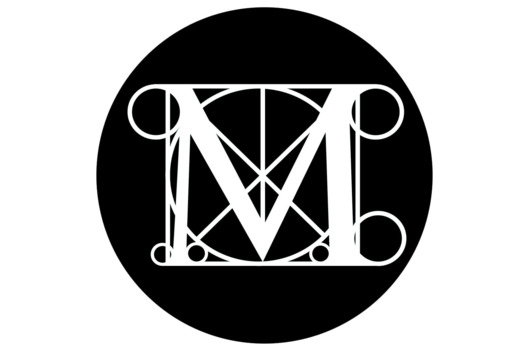
The Metropolitan Museum in New York apparently has a new logo, above. Justin Davidson in Vulture describes it as a 'typographic car crash'. But it doesn't look so bad to me. Compare with the old one below.
Rubens - the Musical
February 18 2016
Video: Stad Antwerpen
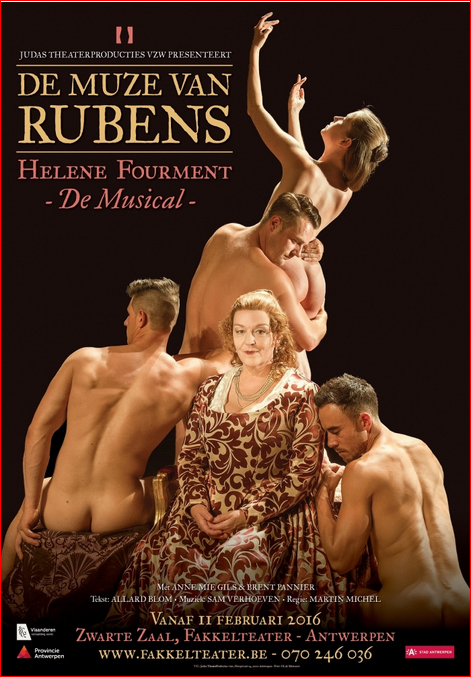
Actually, the star of the show - a new musical in Antwerp called 'De Muze Van Rubens' - is Helene Fourment, Rubens' second wife. It looks like a lot of flesh will be on display.
Update - a reader writes:
As a resident of Antwerp and aficionado of old master paintings, I was pleasantly surprised to see that you picked up the Rubens musical that can be visited today in our city. I haven't had the chance yet to see how Helene Fourment will sing out her love for Rubens, but what I do regret already is the fact that despite the enormous versatility of Rubens, he is depicted once again as the star painter of bulging nudity. Maybe every spectator of this musical should also be obliged to watch Waldemar Januszcack's 2015 documentary on Rubens (An Extra Large Story) as a general introduction, in which he demonstrates that the oeuvre of Rubens concerns a lot more than meaty men and women. Otherwise modern fitness-minded audiences will keep associating Rubens with 'vast and grandiose canvases, stuffed with wobbly mounds of female flesh' as Janusczack puts it. Besides this, it is quite hilarious to see that this musical about a painter with probably the largest canvases of the entire Baroque period is performed in one of the tiniest theatres of the city...
Help restore Turner's villa
February 16 2016
Turner's House from Jonathan Crane on Vimeo.
Video: Vimeo
The campaign to restore Turner's villa, which he designed himself with help from his friend John Soane, is in its final stages. The trust at Sandycombe Lodge has raised over £2m (with £1.4m from the Heritage Lottery Fund), but now needs just £25,000 more before work can begin. There's a crowdfunding page here if you're so minded.
Getting the sitter right
February 16 2016

Picture: Telegraph
Stockton council in the UK has admitted that a bust of one its most famous residents, the inventor of the friction match, John Walker, in fact shows the wrong man. A bust of the wrong John Walker was installed in 1977 (above) with great ceremony, but the mistake has only been admitted now. From the Telegraph:
The bust of John Walker has stood in Stockton-on-Tees, County Durham, since 1977 - but it was revealed at a recent council meeting that it is not the legendary inventor.
It is thought the bust is based on engravings of a well-known actor, also called John Walker, who lived from 1732 to 1807 and never even visited Stockton.
The mistake came to light when a councillor pointed out that the statue is "hidden away" in a corner of the town's Castlegate Shopping Centre.
Councillor Lynn Hall was surprised to find out why the Walker statue wasn't given more prominence.
It turned out the council discovered some time ago that although the statue bore a striking similarity to the match inventor, they had made a blunder.
More here.
'The Renaissance Unchained'
February 16 2016
Video: BBC
I watched the first episode of The Great Waldemar's new BBC4 series 'The Renaissance Unchained' last night. I thought it was excellent, and would urge you to catch it here on iPlayer.
Waldemar's main pitch is that the Italo-centric view of the Renaissance, the product of Vasari's Lives of the Painters, misses out the most important developments of the Renaissance, which took place in the Flanders, where, in the early 15th Century the development of painting in oil provided the real catalyst for the artistic advances of the Renaissance.
Now, I know not everyone is a fan of Waldemar's style. And even I sometimes wish his productions would spend a little more time on basic things like lighting (as seen in the clip above) and more stable camera work. But the key point about Waldemar's programmes is how they carry the viewer through the story with energy, excitement, and humour. Let's face it, how many art historians have ever made you laugh about Van Eyck's Arnolfini Marriage? Waldemar does, and I'm very much looking forward to the next three episodes. Personally, I'd have given him the Civilisation gig too. We may not always agree with his views, but at least with Waldemar we always get a fresh and diverting take on art. And that's what makes his programmes so watchable.
Here's an interview with Waldemar on why he's made the series.
A royal patron for the National Gallery
February 16 2016

Picture: NG
The National Gallery in London has announced that the Prince of Wales is to become its first 'Royal Patron'. This is splendid news all round, and merely the latest reflection of the Prince's dedication to the arts. Perhaps the only surprise is that the NG hasn't had such an official connection with the Royal Family before. If I was a member of the firm, I'd have been itching to be involved.
The Prince (above with new director Gabriele Finaldi and NG Chair Hannah Rothschild) was previously a trustee of the Gallery from 1986-1993. I'm told he was an enthusiastic user of the dream perk afforded to all trustees - the Freedom of the Gallery. This means you can go around whenever you like, day or night; even on Christmas day.
Protecting art authenticators in law
February 15 2016

Picture: widewalls.ch
There have been a number of attempts to change the law in New York state (home of much of the world's art market) to better protect art historians who give their views on authenticity. At the moment, many are afraid to express an opinion for fear of being sued by disgruntled owners, which is obviously not right. The Warhol Foundation's closure is the most famous example.
However, in a probing piece for ArtNet, the lawyer Judith Wallace of Carter, Ledyard & Milburn points out some of the key weaknesses of the current bill going through the New York legislature, the most interesting concerns the matter of warranties:
[...] the proposed amendments state that expert opinions do not give rise to a warranty—period. Thus, if a dealer sells a work, attributing it to a particular artist, based upon an expert's opinion, and three years later the work is discovered to be a fake, the purchaser will demand a refund from the dealer. But the proposed amendments seem to say (perhaps inadvertently) that the buyer would not have a warranty claim—against anyone—because the parties relied on an expert opinion. If that is not the intention of the proposed amendments, the proposal should be revised, and if it is the purpose, it needs to be disclosed and debated, because it is a significant change in the law.
One can imagine the delight in the Knoedler camp had the above formulation already passed into law.
Renoir - The Movie
February 15 2016
Video: Exhibition On Screen
Filmmaker Phil Grabsky has made a film about the largest collection of Renoir paintings in the world, at the Barnes Foundation in Philadelphia. More here.
The film is called 'Renoir - Revered and Reviled'. Regular readers will know which camp I'm in.
Shakespeare's 'droopy eyebrow'
February 15 2016

Picture: The Times/The Australian
Regular readers will know that AHN's nonsense detector goes off when people start seeing medical 'symptoms' in historical portraits. The latest claim, in today's Times, involves Shakespeare. A new biography of William Davenant, the poet, by Simon Andrew Stirling, claims that Davenant was Shakespeare's natural son - and part of the proof is that in both their portraits we can apparently see a 'droopy eyebrow'. Both sitters, therefore, must have been related. Reports Dominic Kenney in The Times:
Two carvings and an engraving of the Bard and two pictures of Davenant indicate they shared the same inherited deformity of a droopy left eyebrow, Stirling observes.
One of the carvings must be the Stratford monument, and the engraving must be the Droeshout engraving. The image above shows a portrait of Davenant and the 'Flower Portrait' of Shakespeare which is based on the Droeshout engraving. Of course, in neither the Stratford monument nor the Droeshout engraving can we actually see a droopy eyebrow, and to infer that either portrait is good or accurate enough to allow us to deduce medical symptoms is simpyl incorrect. Nor does Davenant iconography (an engraving after a lost Greenhill here - hardly prime source material - and a supposed Robert Walker portrait here) show any signs of a droopy eyebrow.
Davenant was supposed to have been Shakespeare's godson. He is best known in AHN parts as the first recorded owner of the Chandos portrait (and that doesn't show a droopy eyebrow either).
Update - a reader writes:
Simon Andrew Stirling's previous book 'Who Killed Shakespeare?' adduced the droopy eyebrow as a post-mortem murder wound. This time round it's congenital, hereditary and - as you say - invisible.
Update II - Simon Andrew Stirling writes:
I'm indebted to you for posting about my new book, Shakespeare's Bastard, and what Dominic Kennedy wrote about it in The Times.
However, I feel I must correct what another reader added to your post. At no point in my previous book, Who Killed William Shakespeare?, did I suggest that the ptosis of Shakespeare's left eyebrow was a post-mortem injury. The damage to the outer edge of the left eye socket was, I believe, the result of a fatal assault, but the drooping eyebrow is a different matter and was not actually referred to in Who Killed William Shakespeare?
The Lincoln College portrait, supposedly of Davenant, has to be studied very closely to see the odd angle of the left eyebrow. The "droop" is more clearly visible in the Faithorne engraving of Davenant. The comparable "droop" of Shakespeare's left eyebrow can be seen in most of the acknowledged portraits of the Bard, including the Chandos. Given that eyebrow ptosis can be an autosomal dominant inheritance, I consider the comparable eyebrows to be worthy of consideration alongside a host of other reasons to suspect that Davenant was indeed Shakespeare's son.
I fear it is possible to see neither a 'droop' nor any damage to the eye socket in Shakespeare's iconography. Likewise, any droop in the Faithorne engraving of Davenant is either a matter of conjecture, or down to Faithorne's abilities as an engraver.
Prado withdraws Bosch loans
February 15 2016

Picture: Museo Prado
The art trade is often criticised for being sensitive about attributions. It doesn't matter who painted a painting, say the academics - the object itself is what matters. But museums can be just as touchy about these things too. The Hermitage Museum museum would only lend its 'Madonna Litta' to the National Gallery's 2012 Leonardo exhibition if it could guarantee that the picture would be labelled as 'Leonardo'. The Hermitage also insisted on writing the catalogue entry themselves.
The National Gallery, believing (I thought justly) that the 'Madonna Litta' was probably not by Leonardo, got around the issue by declaring that the exhibition contained nine paintings 'described by their institutions as by Leonardo'. The catalogue entry for the Madonna Litta read like a piece of Soviet art historical nationalism, but the exhibition's curator, Luke Syson, made it pretty clear elsewhere in the catalogue that many scholars doubted the attribution. It was a good museum fudge, and allowed a proper discussion about the picture's strengths and weaknesses in the context of other works by Leonardo and his followers.
But now the Prado has demonstrated an extreme case of museum sensitivity by withdrawing, just days before the opening, two pictures requested by the Noordbrabants Museum for their new Hieronymous Bosch exhibition. The two pictures are The Cure of Folly, and The Temptation of St Anthony (above), both of which the Prado say are by Bosch, but which the new Bosch Research Project have said are by later followers. The Prado is unhappy about the downgrade. Martin Bailey has the story in The Art Newspaper, and reports:
The Cure of Folly had been promised by the Prado and is in the catalogue, but it was finally withdrawn a matter of days before the opening because the Madrid museum was unhappy about its deattribution and a television film about the Dutch research. Curators at the Prado are convinced it was painted by Bosch between 1500 and 1510, whereas the Netherlands-based Bosch Research and Conservation Project concluded that it was from the workshop or a follower, dating it to 1510-20. A Prado spokeswoman says that The Cure of Folly represents “a very important” part of its permanent collection and a loan to the Noordbrabants exhibition would not be justified.
The Prado also cancelled the loan of The Temptation of St Anthony, regarded as autograph by the Madrid museum and dated to around 1490. The Dutch researchers believe it is by a later follower and done in 1530-40. The Dutch team also rejected the Bosch attribution of The Seven Deadly Sins, saying it is by the workshop or a follower (1510-20). It was not requested for the show.
The Prado's behaviour strikes me as small-minded, rude, unfair, juvenile and contrary to all the usual standards of art historical and curatorial debate. To decline a loan because you're sensitive about an attribution is one thing, but to withdraw an agreed loan at the last minute, after the show has been designed, and the catalogue has gone to press, demonstrates breathtaking institutional arrogance.
The Bosch project may well have got itself into the sort of art historical contortions we might see in a Bosch painting. I can't find their reasoning on their website. Maybe the Prado is right, and the pictures are by Bosch. The St Anthony doesn't immediately look (from the website images) like a much later 1530s/40s pastiche, as the Bosch project suggests. But the best way for the Prado to demonstrate that their pictures are 'right' is to send them to the Bosch exhibition, where people can compare them with other works. Let the pictures speak for themselves.
For some time now, the world of intra-museum loans for exhibitions has become a bureacratic and curatorial nightmare. Pictures are no longer just loaned for an interesting exhibition, but are used as leverage to extract things in return. Ever more laborious conservation and transport restrictions are added, usually by conservation departments whose sole raison d'etre seems to be to say 'no' to loan requests (or require couriers to travel with items, in business class of course). And as we have seen above, loans can now come with attributional strings attached, restricting debate and scholarship. The end result is that even a small Old Master display in a medium-sized museum can now cost between £300,000 and £400,000 - a ridiculous sum. In the meantime, costs are cut elsewhere, most shamefully in curatorial salaries.
The last decade has seen a massive inflation in the cost (both financial and in terms of quid pro quos) of moving museum pictures about. It is entirely unnecessary, and something needs to be done about it. The simplest thing to do would be for the world's leading museum directors to get together and say they won't indulge in this behaviour any more. Of course, it won't happen.
Update - a reader tweets:
So last minute was the withdrawal that there's still a number tag on the wall where St Anthony would have hung.
Update II - but the Prado now says it withdrew the loans in November.
'The greatest depiction of love at first sight'
February 12 2016
Video: National Gallery
As part of their #PaintedLovers series, here National Gallery curator Matthias Wivel argues that Titian's Bacchus and Ariadne shows the greatest depicton of 'love at first' sight in art.
Louvre to clean another Leonardo (ctd.)
February 12 2016

Picture: Louvre
Last month the Louvre announced that they would clean Leonardo's late work, St John the Baptist. Cue much outrage. Now, Leonardo 'expert' Prof. Carlo Pedretti has waded into the story, saying the Louvre shouldn't touch the picture.
Regular readers will know that AHN holds Pedretti in rather low regard (put 'Pedretti' into the search box to see why). The minute he rallies to a cause, I feel myself taking the opposite side. But the case of the St John is a difficult one, and I'm not entirely sure what the answer is. Like the Great Waldemar, speaking about the matter here on BBC Radio 4's Front Row, I am 'conflicted' about whether the restoration should go ahead.
As Waldemar says, this is now a picture so dark you almost cannot see it. And he's right to say the Louvre should spend the money simply fixing the Italian gallery in which it hangs with better lighting (I would also add some feather dusters). But Waldemar says that if we were to clean one picture in that Italian gallery at the Louvre it should probably be this one.
And yet the Louvre's previous Leonardo restoration, of the Virgin with St Anne, was not considered a success. Hence the latest hoo ha. I have been to see that picture since it was cleaned, and it is indeed disappointing.
But the conservation debate has taken a curious turn of late. In my view, I don't think the Virgin with St Anne was 'over-cleaned' a great deal, as everyone says. Rather, the masking qualities of centuries of old varnish and dirt was removed, leaving visible all the damages that were inflicted on the picture in previous campaigns of 'cleaning', from past ages that thought it was ok to scrub pictures with urea, a potato cut in half, a rough sponge, and so on.
Now, the problem comes because many of today's museum staff, and much punditry, has taken the view that we should leave such damages visible, and that these damages should not be retouched by a competent conservator. In other words, damage to a picture is 'part of its story', and we should just live with it. Consequently, the Virgin with St Anne looked like it had been 'over-cleaned' because suddenly the old damage was much more visible.
But this approach means that we end up celebrating the clods who have damaged pictures as equally as the geniuses that created them. And I don't see why we should do that. If you've done it, as I have, judiciously restoring pictures is actually not impossible. You just need the combined talents of a good conservator and the connoisseurial eye of someone who knows their way around an artist's oeuvre. The former is far more important than the latter of course, but it is best done as a team effort. It's not really that hard to identify the areas where, for example, a dark glaze has been abraded in the past, and to recreate where it went with the use of entirely reversible modern re-touching media.
Some people getting their ethical antenna in a twist about this approach, but it didn't stop Van Dyck happily re-touching damaged Titians. If the alternative, today, is looking at a wrecked picture, or making some effort to understand that a 400 year old picture has inevitably been damaged at some time in its life, and that we ought to be brave enough to aesthetically (but non-permanently) reverse that damage, then why shouldn't we? There is nothing dishonest about it. And if you went around most major museums of the world deliberately removing the efforts of past restorers, you would soon end up with collections in which about 80% of the works looked like they'd been given a good going over with sandpaper. If we wouldn't take that approach retrospectively, then why do it all?
Update - a reader writes:
With no expertise at all, just as someone who loves looking at great (and not so great) art, I find your reasoning makes sense. But what do others think, and why? Preferably without 'anthropologizing' artworks…
Knoedler trial ends! (ctd.)
February 12 2016

Picture: Illustrated Courtroom
Well, it really is all over now. Having settled with the Knoedler director Anne Freedman, the De Soles (who had bought a fake $8m Rothko) have now settled with the Knoedler gallery itself. So we won't now hear testimony from the main players in the events. Knoedler keeps its secrets. But at least there was no nightmare outcome of the jury deciding in favour of Knoedler/Freedman, which (however unlikely) would have established an alarming legal precedent that it was up to the buyer to do their due diligence on things like attribution and provenance.
The Art Newspaper speculates here as to why the De Soles might have settled.
$1,049,465,009
February 9 2016

Picture: New Yorker
That's the amount a Russian billionaire, Dmitry Rybolovlev (above) claims that his one time art agent, Yves Bouvier, overcharged him on art deals. Bouvier claims he was merely being 'clever', which is one way of describing an alleged mark-up of about $50m on the sale of Leonardo's Salvator Mundi. Others might call it a con. Sam Knight has an excellent account of the saga in The New Yorker.
Michelangelo's villa for sale
February 9 2016

Picture: via Hyperallergic
Yours for just $8.4m, reports Claire Voon at Hyperallergic.
